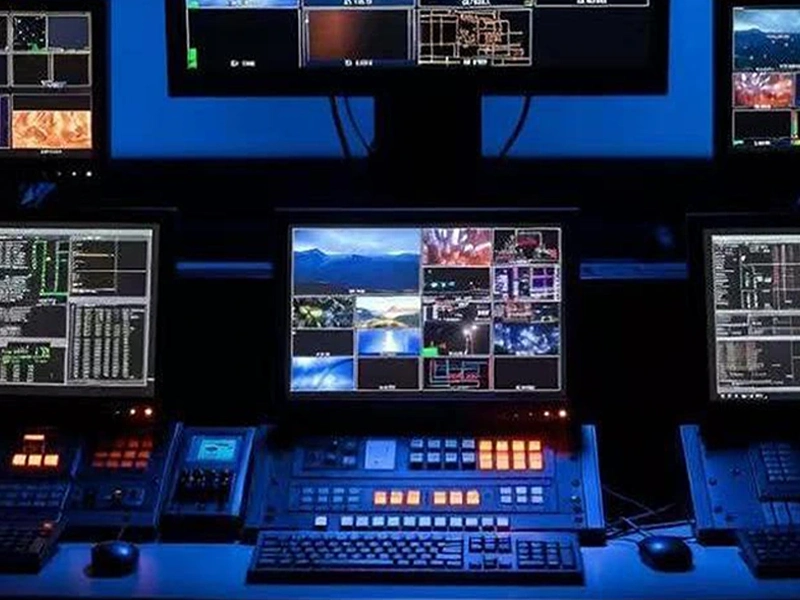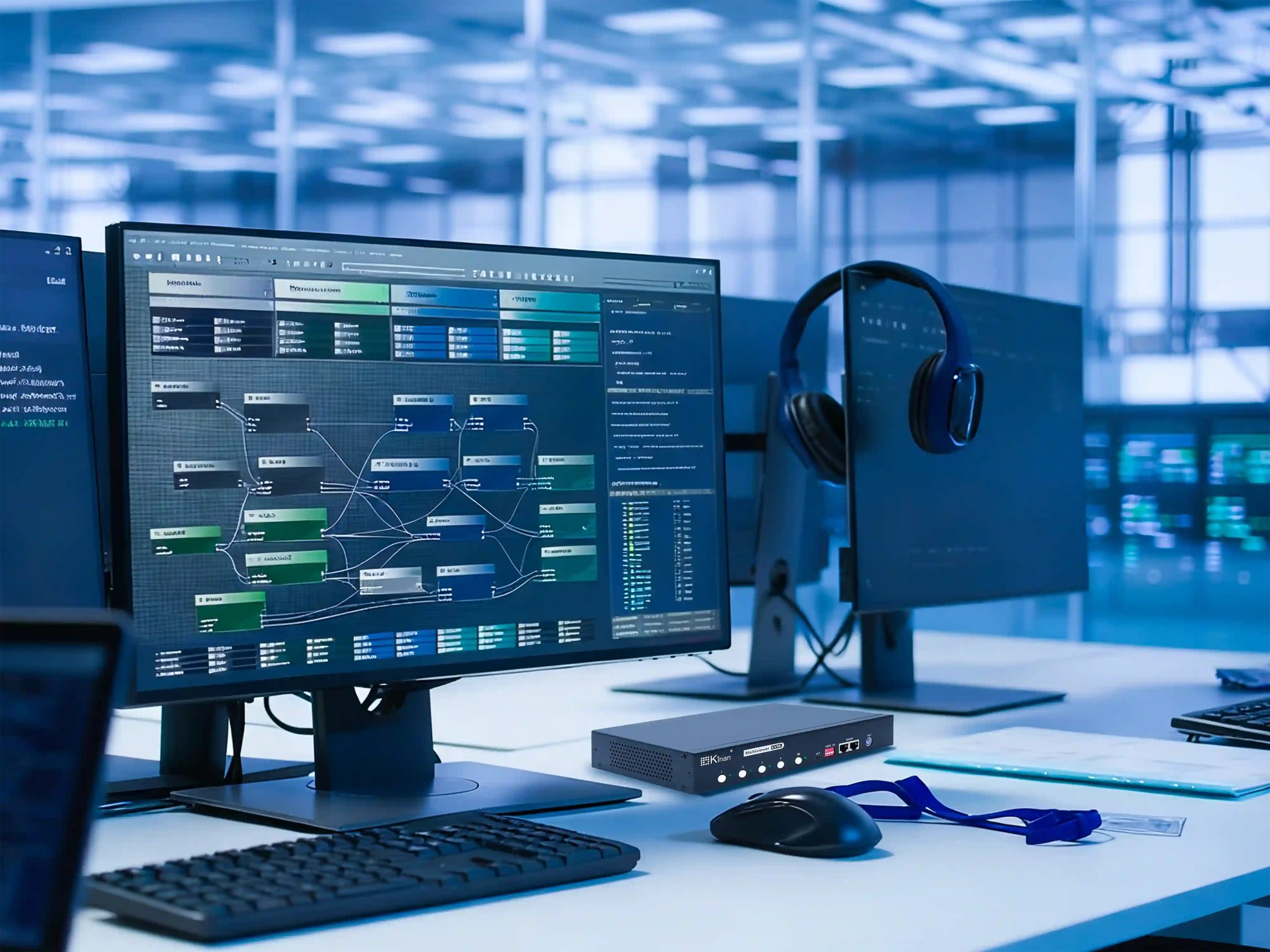
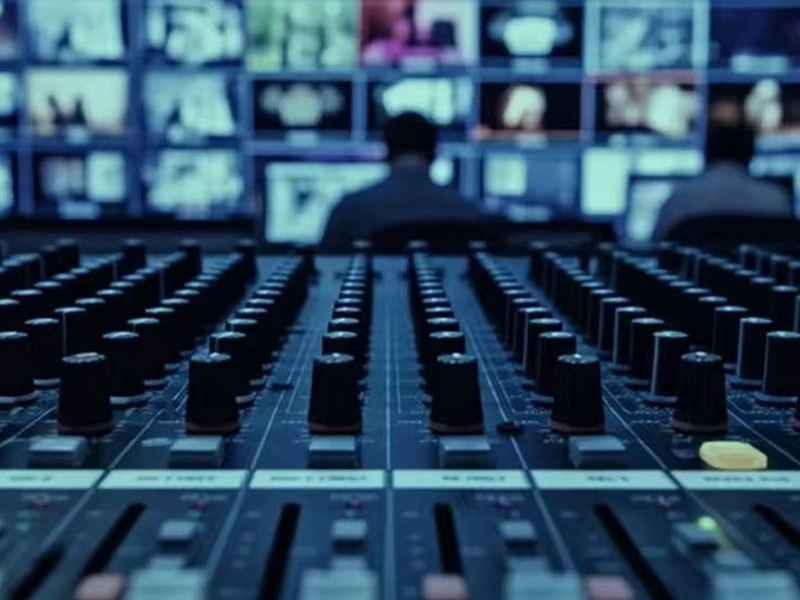
Imagine the nerve centre of a live television broadcast: a bustling room surrounded by flashing server racks, dedicated editing workstations, graphics generators and audio mixing desks. Now picture the operator not besieged by a jungle of keyboards and monitors for each system, but seated calmly at a streamlined console, seamlessly orchestrating the entire technical symphony. This is not fiction, but the reality created by professional KVM solutions across broadcasting, media, and information and communications technology (ICT). In environments where space is precious, precision is non-negotiable, and uptime is critical, KVM technology demonstrates that managing vast technical complexity within confined spaces is not only feasible, but the optimal solution.
Why KVM is Essential in Broadcasting and ICT?
Core ICT infrastructure such as broadcast facilities, post-production houses, and data centers face unique operational challenges. This has transformed KVM switches from a convenient tool into an absolute necessity.
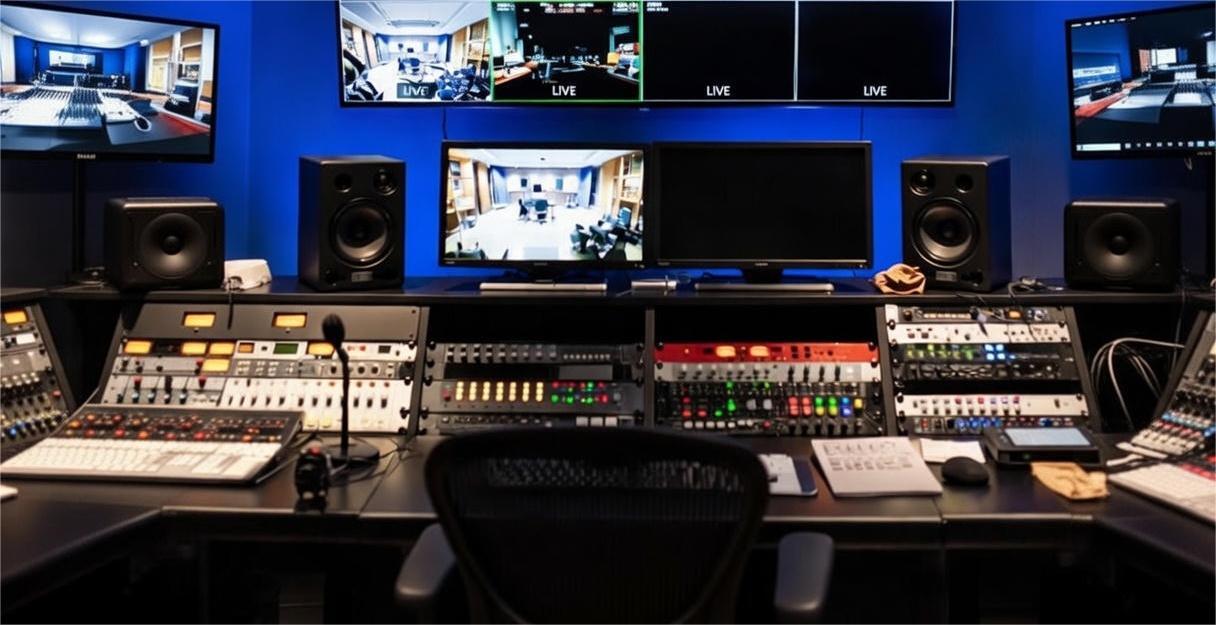
Space Constraints
Equipment racks represent prime real estate, where every inch counts. Equipping each server, router, or dedicated processing unit with a dedicated keyboard, monitor, and mouse ( a ‘KVM workstation’) is impractical both physically and financially.
Criticality of Control and Operational Timeliness
During live broadcasts, spending 30 seconds hunting for a keyboard to fix a malfunctioning graphics server is simply unacceptable. When troubleshooting network issues, data centre engineers require immediate, reliable access to multiple hardware devices. Direct physical intervention is often faster and more secure than remote software solutions, particularly for BIOS-level management or during network outages.
Multi-Platform Complexity
Modern facilities are rarely homogeneous. They integrate Windows-based editing PCs, Linux servers, proprietary broadcast hardware, and design workstations. A single operator requires unified control over all equipment without learning distinct access protocols for each device.
Security Imperatives
In broadcasting, leaks of unpublished content can lead to catastrophic consequences. In information and communications technology, unauthorized access constitutes a security breach. KVM systems, particularly those with advanced switching and user authentication capabilities, enable “hardware isolation” level control. This ensures operators can only access authorized systems while generating clear audit trails.
In environments where high-density technology, zero-tolerance for errors, and stringent security requirements converge, basic desktop KVM switches have been superseded by robust enterprise alternatives: IP KVM systems and high-performance matrix switchers.
KVM’s Role in Mission-Critical Operations
So how does KVM technology tangibly solve these high-stakes problems? Its application is both broad and deep.
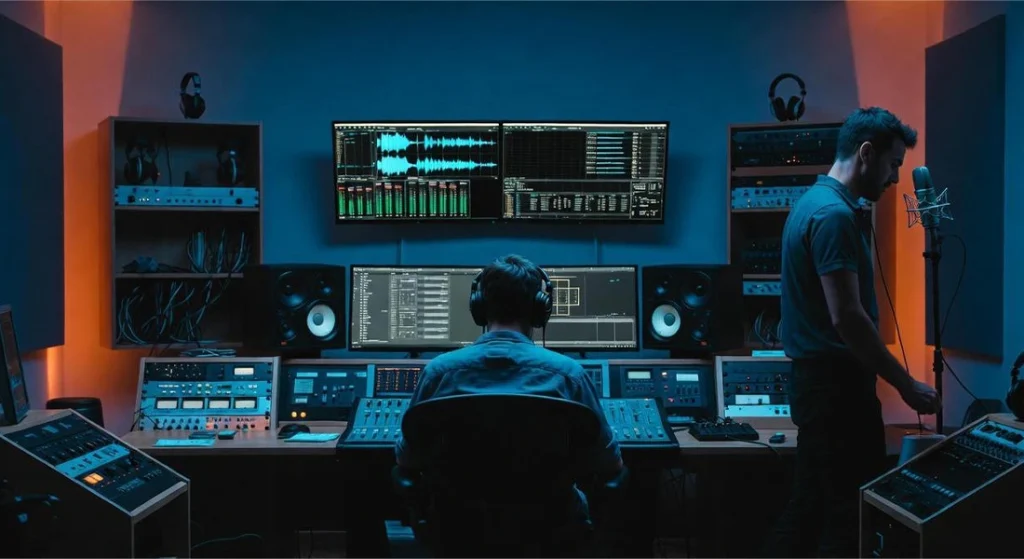
Broadcast & Live Production
KVM systems act as the technical director’s ultimate tool. A single production desk can house interfaces for:
Vision Mixing & Switcher Control: The primary console for cutting live camera feeds.
- Vision Mixing & Switcher Control: The primary console for cutting live camera feeds.
Graphics & Replay Systems: Operators can instantly switch their console to control the character generator (CG) to update a lower-third, or to the replay server to queue a highlight.
- Graphics & Replay Systems: Operators can instantly switch their console to control the character generator (CG) to update a lower-third, or to the replay server to queue a highlight.
Audio Mixing and Server Management: Access dedicated audio workstations and the play-out servers responsible for rolling pre-recorded videos, all without leaving the seat.
This seamless control is enabled by KVM matrix switches. These are the central nervous system. They allow any user station (console) to connect to any server or source device in the rack room. An engineer in the central apparatus room (CAR) can diagnose a server issue on their local station, while simultaneously, the director in the gallery is using an identical station to control the graphics machine. The KVM matrix manages these concurrent, independent access paths flawlessly.
Post-Production & Media Facilities
Efficiency is revenue. Editors, colorists, and VFX artists often work on powerful, dedicated workstations (Windows for certain software, Linux for rendering, MacOS for final mastering). A high-resolution KVM switch (supporting 4K, 8K, HDR, and high refresh rates) allows a single artist to control multiple specialized machines from one ergonomic setup with a perfect monitor and their preferred keyboard/mouse. This eliminates the cost and clutter of multiple full stations, speeding up workflows as artists move assets between systems for different processing stages without physically moving.
ICT & Data Centers
This is the birthplace of enterprise KVM. KVM over IP solutions are the game-changer here. They transmit keyboard, video, and mouse signals over standard Ethernet networks.

Built-in Security Separation
- Remote, Border-less Access: A network engineer in an office on another continent can access the BIOS of a server sitting in a Tokyo data center as if they were standing in front of it, using just a laptop and a network connection.
- High-Density Management: One or two centralized KVM stations can provide secure, out-of-band (OOB) management for hundreds or even thousands of rack-mounted servers, network switches, and storage arrays, regardless of their operating system.
- Disaster Recovery & Collaboration: Multiple authorized administrators can access the same critical server simultaneously for collaborative troubleshooting during an outage, with clear permissions defining who has control.
Conclusion
In the high-pressure worlds of broadcasting, media, and IT, professional KVM solutions are the essential backbone for control and efficiency. They directly solve the critical challenges of limited space, immediate system access, multi-platform complexity, and robust security.
By enabling a single console to command an entire server network and dedicated hardware—from on-site production switchers to remote data centers—KVM transforms operational complexity into efficient control. This demonstrates that managing advanced technology lies not in increasing equipment quantity, but in smarter centralized command.
In short, KVM is the invisible force that ensures precision, maintains uptime, and empowers operators. It makes the daunting task of consolidating vast technology into compact spaces not only possible, but standard practice.